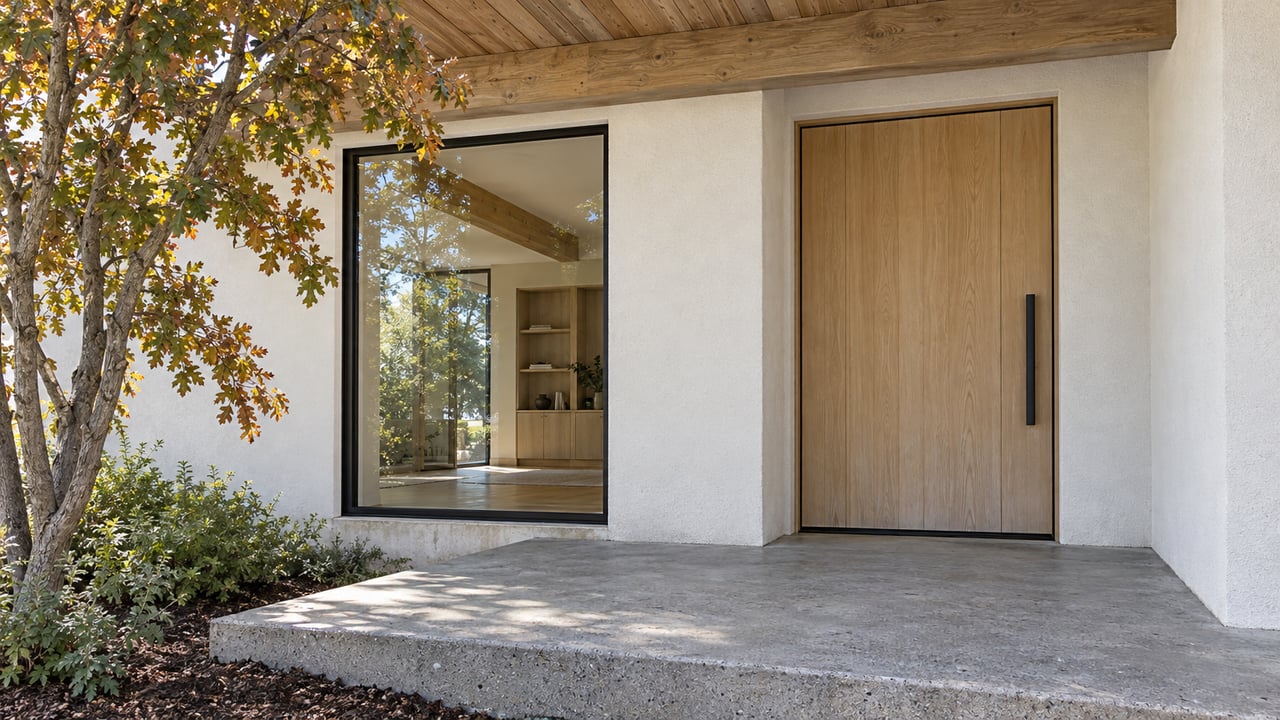

Picture two homes in Parker, both listed near $700,000, both built within the last decade, both a short walk from a park. One carries a monthly payment that matches the mortgage calculator almost exactly. The other comes with a property tax line running several hundred dollars higher every month, for reasons that have nothing to do with the house, the lot, or the school it feeds into. The gap sits inside a taxing entity most buyers never think to ask about until the closing disclosure lands in their inbox.
That difference is not a fluke of appraisal. It is Colorado's metro district system working exactly as designed, and in 2024 and again in 2025 state lawmakers changed what a seller has to tell a buyer about it before anyone signs.
The Town's Mill Levy Is Almost Never the Culprit
According to the Town of Parker, Parker's own municipal mill levy is 2.602 mills, one of the lowest rates among the state's fifty largest municipalities. On a home with an actual value of $600,000, that works out to roughly $104.60 a year in Town of Parker property tax. On a $400,000 home, the Town's own share is closer to $75. Compare either figure against a full tax bill and the arithmetic tells you the Town Council was never where the real money was going.
The rest of that bill is split among a stack of independent taxing authorities that have nothing to do with anything the Town does or decides:
- Douglas County government
- Douglas County School District RE-1
- Parker Water and Sanitation District
- South Metro Fire Rescue
- A metropolitan district, in most neighborhoods built since the mid 1990s
That last one is the layer that actually moves the number.
Where the Real Number Lives
A metropolitan district is a separate unit of local government, created under Colorado's Title 32 at a developer's request, formed to finance the roads, water lines, sewer and parks a new subdivision needs before a single house is built. Rather than making a buyer wait years for that infrastructure to get funded through the normal tax base, the district issues bonds, builds the improvements up front, and repays that debt over decades through its own mill levy, stacked on top of everything else on the parcel.
How high can that layer run? The Parker Homestead Metropolitan District's service plan, approved by the Town of Parker in 2010, authorizes a levy of up to 35 mills to repay bonds, against a maximum debt of $8.3 million. Set that next to the Town's own 2.602 mills and you have a district with legal room to collect roughly thirteen times what Parker itself collects on the identical parcel. That is not a worst case scenario. It is the ceiling written into the district's own governing documents, the kind of number a buyer can look up before ever writing an offer.
Timing matters too. Early in a subdivision's life, a district may have issued bonds for the full build out while only a fraction of the planned homes have closed, which means fewer taxpayers are covering the same debt payment. That is part of why a buyer in a neighborhood's first phases can see a heavier mill levy than a neighbor who buys five years later, once more rooftops are sharing the bond.
HOA Dues Are a Different Line Entirely
None of this has anything to do with a homeowners association, and mixing up the two is the single most common mistake buyers make when comparing Parker listings side by side. An HOA is a private corporation that collects dues and enforces covenants. A metro district is a unit of government that collects property tax and repays bonds. A Parker home can carry one, the other, both, or in some communities several layers of each.
| Layer | What it is | What it funds | Local example |
|---|---|---|---|
| Town of Parker | Municipal mill levy, 2.602 mills | General town services | Same rate on every in-town parcel |
| County, schools, fire, water | Independent taxing authorities | County government, RE-1 schools, South Metro Fire, Parker Water and Sanitation | Applies wherever the boundary reaches |
| Metro district | Special district mill levy, capped in its service plan | Repays bonds for roads, water lines and parks built up front | Parker Homestead Metropolitan District, capped at 35 mills |
| HOA | Private dues, not a tax | Amenities, covenants, common area upkeep | Canterberry Crossing, Looking Glass, Pradera |
Canterberry Crossing shows how complicated the HOA side alone can get. Homes there fall under the Villages of Parker master association plus a separate sub-association, and 2026 assessment rates across those layers range from about $69 a quarter up to $485 a month depending on which sub-association a home sits in. One sub-association, Creekside West, has special assessments scheduled for both 2026 and 2027, on top of its regular dues.
Looking Glass, a planned community of roughly 2,489 homes, keeps dues closer to $50 a month based on its build out budget, funding trails, playgrounds and shared paths rather than a clubhouse or pool. Golf course communities like Pradera and Colorado Golf Club sit at the other end, with dues commonly running $150 to $300 or more a month for maintained courses and clubhouse access.
Layer a metro district's mill levy on top of any of these HOA structures and the true monthly cost of two homes at the same list price can diverge by hundreds of dollars, none of it visible in the sale price itself.
The Paperwork Changed in the Last Two Years
For years, a metro district's mill levy was public record but not something a seller was required to hand a buyer directly. That changed with Senate Bill 23-110, effective January 1, 2024. Under that law, an owner selling residential property inside a metropolitan district organized in 2000 or later must give the buyer the district's official website, the one every district is now required to maintain with its board contacts, meeting schedule, outstanding debt and maximum mill levy, before the deal closes.
In 2025, lawmakers went further with House Bill 25-1219. Sellers inside a metro district now have to provide access to the district's most recent notice to electors and its service plan, a plain description of the district's authority to issue debt or impose fees, and an estimate of that year's district property taxes stated as an actual dollar figure rather than a mill levy number most buyers cannot translate on their own.
In practice, a Parker buyer today is legally entitled to a specific dollar estimate of the district's share of their tax bill before signing a contract, not after. Very few buyers ask for it in writing, and not every seller volunteers it unprompted.
What This Means With Buyers Holding More Room to Ask
Questions like this used to get lost in the scramble of multiple offer situations, when buyers were waiving contingencies just to stay competitive. That is not the market Parker buyers are working in this fall. Denver Metro's active inventory sat at 13,211 listings in August 2026, and REcolorado's own report put the market at roughly 18 weeks of supply, with the median closed price holding near $595,000 and homes spending a median of 29 days in the MLS. Parker homes routinely price above that broader metro figure, which is exactly why a buyer comparing two Parker listings near the same price point cannot assume the tax line is comparable just because the sale price is.
With inventory this deep, a buyer has time to request the district's official website, ask for the dollar estimate the 2025 law now requires, and run the math before writing an offer instead of discovering it after the first tax bill arrives.
Before You Write an Offer
A few minutes of homework settles the question for any specific Parker address:
- Pull the parcel on the Douglas County Assessor's site to see every taxing authority attached to that property, not just the ones mentioned in the listing description.
- Ask for the metro district's official website directly and in writing rather than relying on a verbal summary. State law requires the seller to provide it if a district applies.
- Have your title company confirm the district's recorded service plan and current mill levy, along with whether any bonds are scheduled for refinancing or retirement soon, since either can move the levy up or down.
- Compare that district figure against the HOA's own disclosure packet before assuming a lower HOA fee means a lower total monthly cost.
Quick Questions
Does every newer neighborhood in Parker have a metro district? Not every one, but most communities built since the mid 1990s pair a metro district with an HOA. Older, established neighborhoods on Parker's west side are more likely to sit outside any district.
Can a metro district's mill levy change after I buy? Yes. A district's mill levy can change after you buy.
Does the disclosure law apply to resale homes, or only new construction? It applies to any residential sale inside a qualifying metro district, whether the home is new construction or a resale. The requirement to provide the district's website and, since 2025, a dollar figure estimate is not limited to builder transactions.
None of this is a reason to avoid a Parker neighborhood with a metro district. Districts fund real infrastructure, and plenty of buyers decide the trade off is worth it once they know the actual number. The point is knowing that number before you compete for the house, not after the first tax bill arrives.
If you are comparing Parker communities and want the metro district and HOA math run on a specific address before you write an offer, the Billy Van Heusen Team can walk you through both sides of that ledger. And if you are also weighing what your current home would bring in a market where buyers finally have room to ask these questions, Get Your Free Home Valuation and let's talk through what the numbers actually mean for you.
This article is general information, not legal, tax or financial advice. Consult a qualified professional about your situation.